
FUE Milwaukee
Hand-Extracted FUE for the Milwaukee Area: Planned Around Your Donor Hair
FUE Milwaukee patients come to our Glendale clinic for a hair transplant that moves follicles one at a time, without cutting a strip from the scalp. Follicular Unit Extraction takes small groups of one to four hairs from the back and sides of the head, where hair is naturally more resistant to thinning, and moves them to the areas that have receded or thinned. The new growth comes from your own hair, so it keeps its own color and texture.
Because each follicle is lifted out through a tiny round opening, the donor area heals as scattered pinpoint marks instead of a single line. That makes FUE a practical choice for men and women who keep the back and sides short, or who simply do not want a stitched wound to look after.
Most people who ask us about FUE are dealing with one of three patterns: a hairline that has crept back at the temples, a crown that is opening up, or general thinning across the top. Each pattern calls for a different graft plan, and that plan decides how natural the finished result looks.
Consultations and procedures are offered at our Milwaukee clinic in Glendale, just north of the city in Milwaukee County, so patients from across the Milwaukee area and southeastern Wisconsin can stay close to home. Our main clinic is in Madison (2261 Deming Way, Middleton). At either location, Dr. Richard Parfitt, MD, reviews each plan before a date is set: how many grafts your donor zone can safely give, where the hairline should sit for your face and age, and which zone gets priority. The Milwaukee clinic page has the address and booking details.
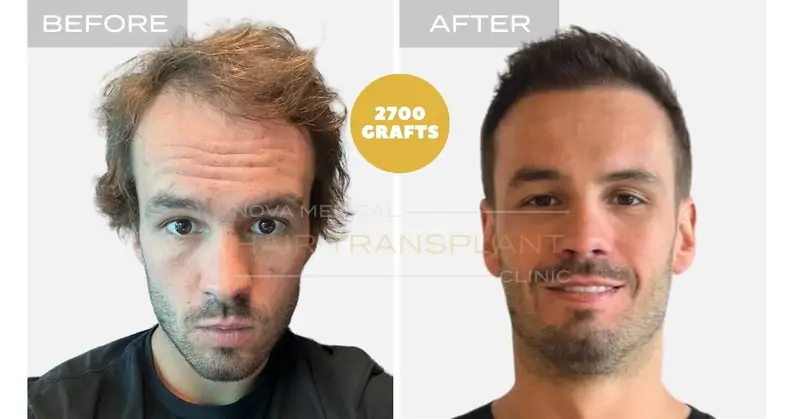
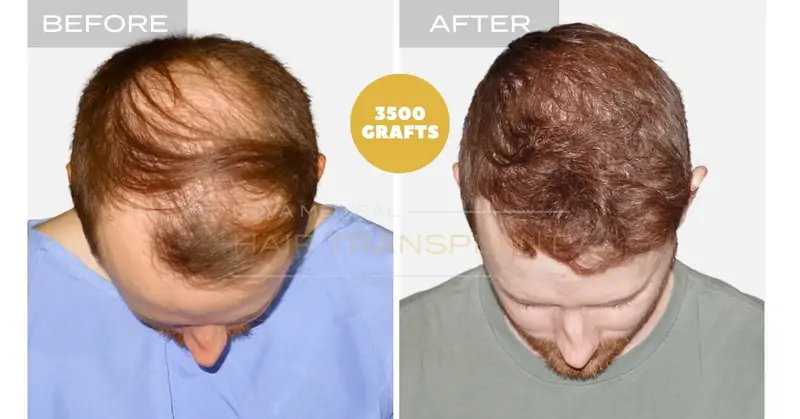
Before & After Gallery
Every result shows the grafts it took and what the same plan costs. Tap one to see your plan.
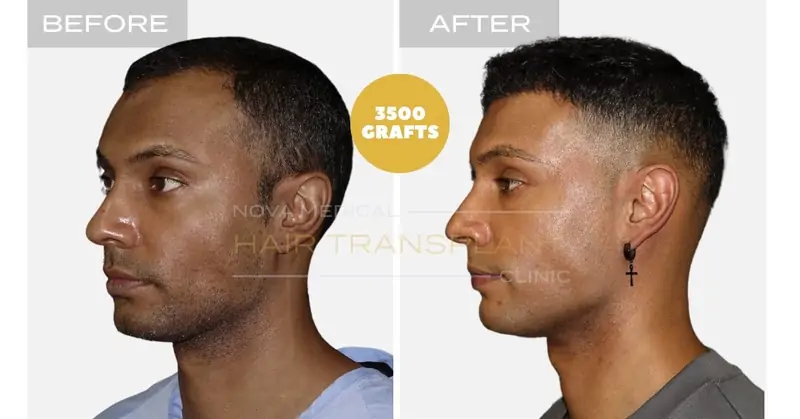
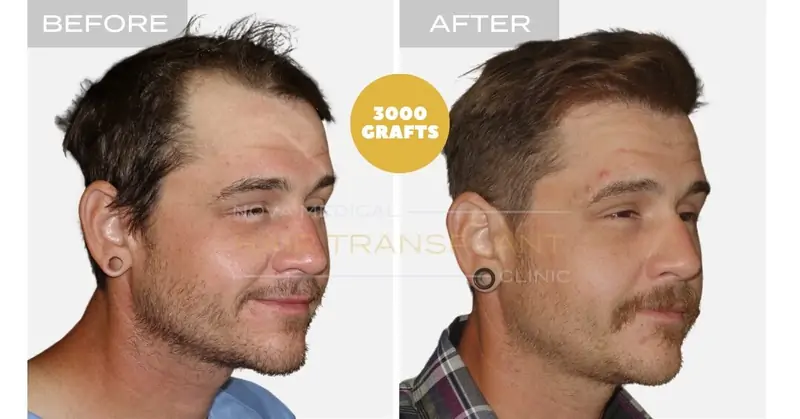
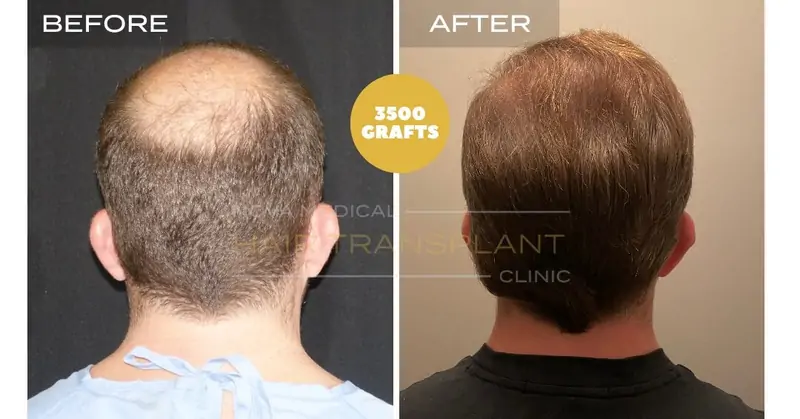

Estimates only - your exact plan and price are confirmed at your free assessment. Monthly payment options available, as low as $270/mo, subject to credit approval. Results vary and are not guaranteed.
Disclaimer: Outcome or results shown are not guaranteed and may vary from patient to patient. Cosmetic procedures are associated with possible risks and complications, always have a thorough discussion with your surgeon. Images posted with consent.
FUE Milwaukee: The Procedure Day
-
1
Assessment at the Glendale Clinic
We start by examining your scalp under magnification to measure donor density, map how far the thinning has spread and talk through the look you are hoping for. You leave this visit with a graft estimate and a written plan.
-
2
Drawing the Hairline
Before any anesthetic, the proposed hairline is sketched on your forehead with a surgical marker. You can check it in a mirror and ask for changes at the temples or center until it looks right to you.
-
3
Extraction
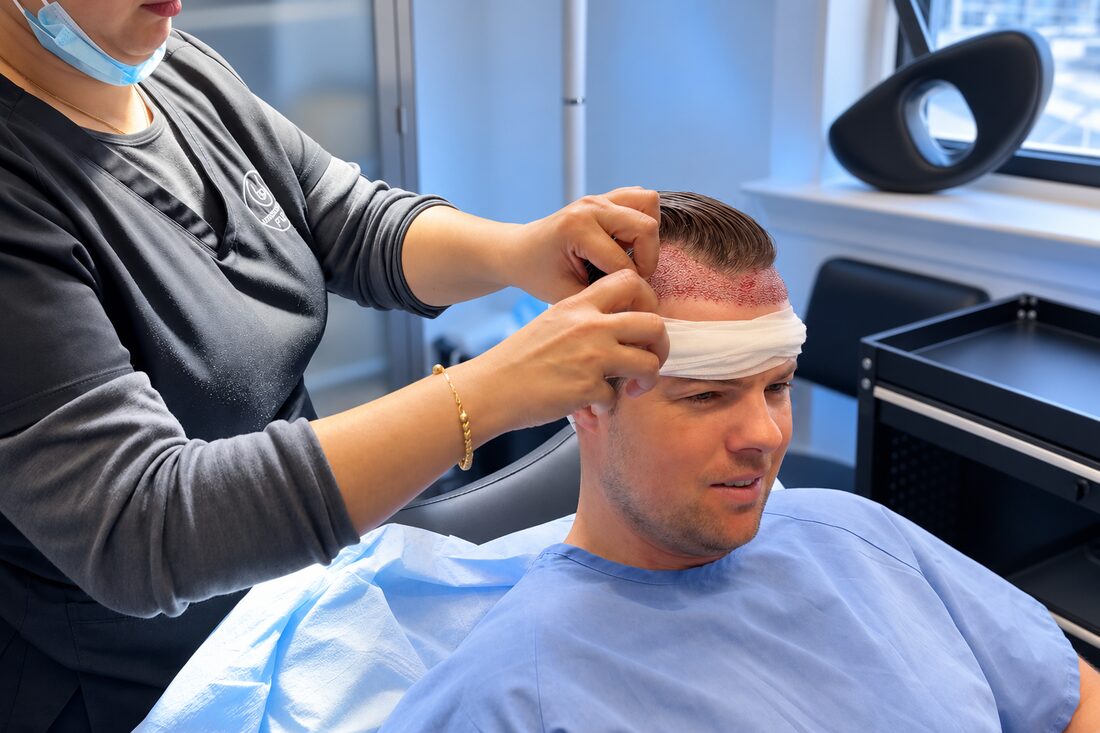
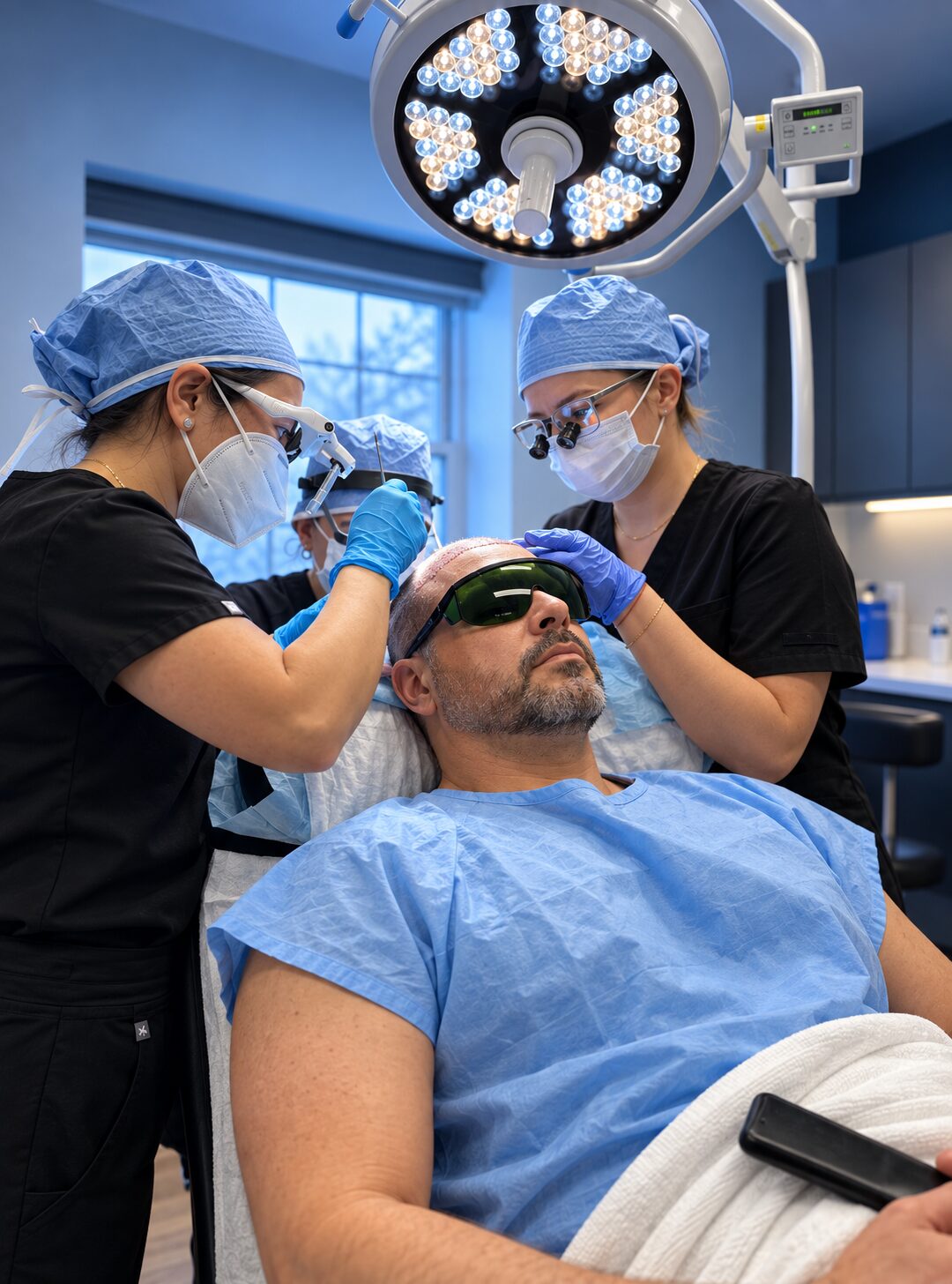
Local anesthetic numbs the donor area, then the team lifts out follicular units one by one with a punch smaller than a millimeter across. The tiny openings close on their own, so no sutures are needed.
-
4
Implantation
Small recipient sites are made in the thinning zone, each angled to follow the direction your existing hair grows. Grafts go into these sites in clusters, which keeps the new hair from looking stiff or uniform.
-
5
The Year That Follows
Shedding of the transplanted hairs within the first few weeks is part of the normal cycle. Fresh growth generally appears from about month three or four and keeps thickening until the final result shows at around twelve to eighteen months.
What Shapes the Cost of FUE in Milwaukee
The main driver of FUE cost is the graft count. A small hairline refinement may need a modest number of grafts, while a case covering the front, mid-scalp and crown needs several times as many, and every graft is harvested and placed by hand.
Your donor supply and scalp matter too. Dense donor hair and a healthy scalp make the work more predictable, while repairing an earlier transplant or working with fine, low-density donor hair can add time and planning to the day.
We would rather show you the numbers than leave you guessing, so pricing is explained in full at the consultation, and financing is available if you prefer to spread the payments.
Our rate across Wisconsin is $3.99 to $7.99 per graft, with most procedures falling between $4,000 and $15,000 and no session fees on top. 0% financing is offered for the first 12 months. The hair transplant cost Milwaukee page breaks the figures down, and your free assessment ends with a written quote based on your own graft count.
Request a Free Consultation
No obligation • Free assessment
How Many Hours Does FUE Take?
Expect to spend most of a day with us. An FUE session usually runs from 4 to 10 hours, and the graft count sets the pace; a large session of 2,000 to 2,500 follicular units sits at the longer end of that range.
You stay awake the whole time with the scalp numbed, so you can watch something, listen to an audiobook or simply rest while the team works.
The schedule includes breaks to stand up and stretch, and we provide lunch and snacks so the hours pass without you running on empty.
Is FUE Right for You?
FUE tends to suit people who want to restore a hairline or add density without a linear donor scar. If you like your hair clipped short at the back, or want the option to buzz it later, extraction keeps that door open.
A good candidate has enough healthy donor hair to share, a scalp in good condition and expectations that match what that donor supply can deliver. We offer both FUE and FUT hair transplants in Milwaukee, so if a strip would serve you better, we will tell you. Many men in the Milwaukee area still lean toward FUE because recovery is quick and the donor area stays discreet.
FUE can rebuild a receded front, fill a thinning crown, close up bald patches and add density where hair has become see-through. Grafts are placed to follow your own growth pattern, which matters most at the hairline, where people look first.
The same extraction method works for facial hair as well. Grafts can fill a patchy beard, mustache or sideburns, or rebuild sparse eyebrows. Because the donor marks are tiny and spread out, most people can wear short styles once they have healed.
- Men with temple recession, crown thinning or loss across the top of the head
- Hair loss that has been fairly stable for at least a year
- Healthy, reasonably dense hair at the back and sides to use as donor
- Good overall health and a willingness to avoid smoking around the surgery
- Realistic goals that fit the amount of donor hair available
- Women with a high or uneven hairline, traction thinning or scar patches
Why Patients Choose FUE
Extraction has become a common way to move hair from one part of the scalp to another. These are the practical reasons Milwaukee patients ask for it.
No Strip, No Stitches
FUE does not remove a band of scalp the way strip surgery does. Each follicular unit is lifted out with a fine punch, so there is no long incision to close and no sutures to take out later. Discomfort during the session is usually mild, and most people manage light activity within a few days.
Discreet Donor Area
Instead of a single line, the back of the head heals as small scattered dots that sit among the surrounding hair. Short fades and close clipper cuts stay an option once you have healed, which is a big reason people who like a tidy, short look pick this method.
Quick Return to Routine
With no wound to protect, recovery is lighter than after a strip procedure. The extraction points crust over and heal within days, and many patients are back at a desk soon after, which helps anyone who cannot take much time off.
Hair That Blends In
Every graft is set at the angle, direction and spacing of the hair around it. When placement follows your natural pattern, the transplanted hair grows in looking as if it had always been there, whether the work is at the hairline, the crown, the brows or the beard.
Durable Grafts
Hair from the back and sides is usually less sensitive to the hormone that drives pattern loss. Moved into a thinning zone, those follicles generally keep that trait and go on growing year after year.
Works With Different Textures
Straight, wavy, coarse and tightly curled hair can all be treated. Aligning the punch with the curve of each follicle below the skin protects the graft, however the hair grows.
How FUE Works at Our Milwaukee Clinic
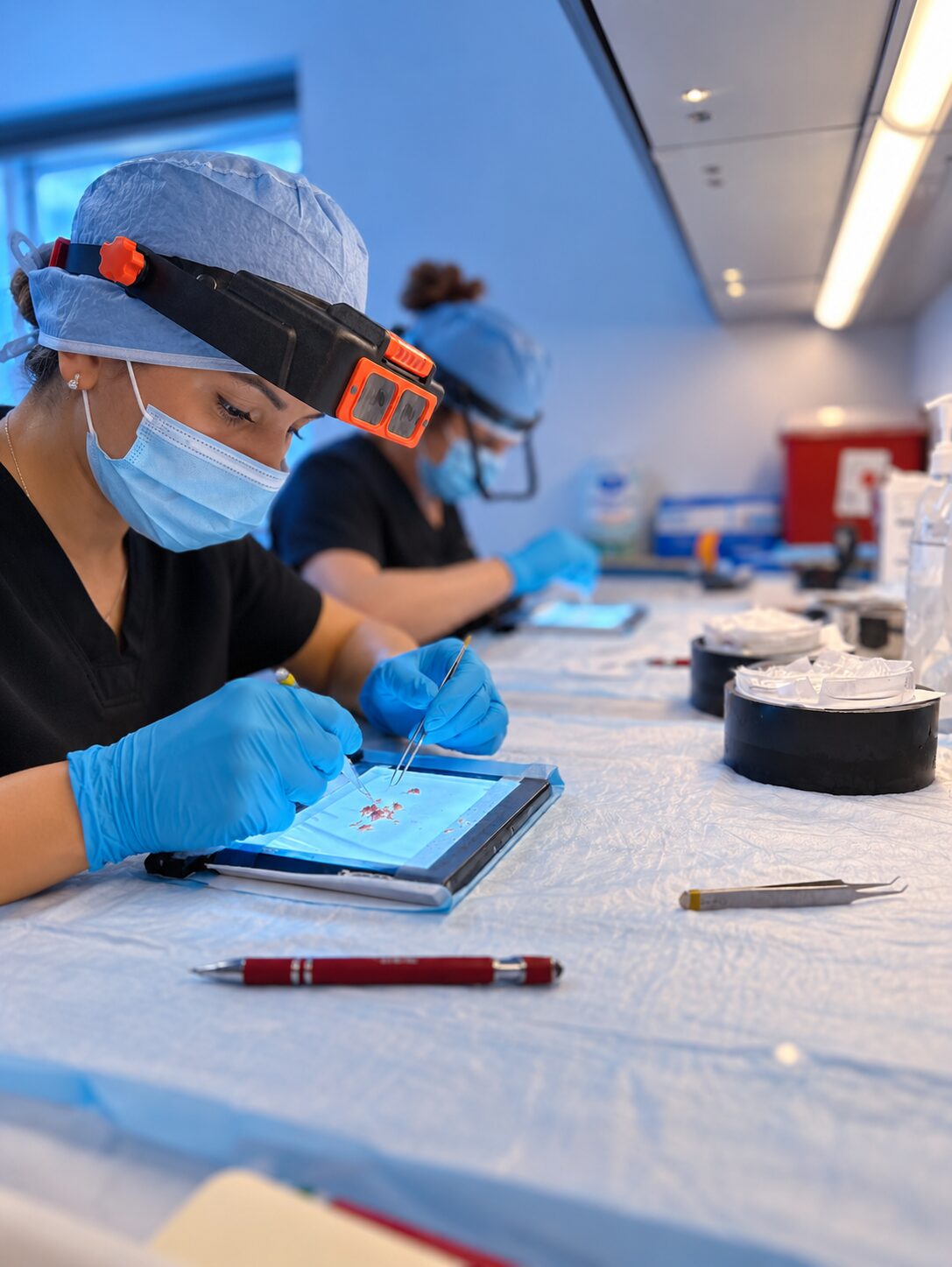
Precision is what separates a natural FUE result from an obvious one. At Nova Medical Hair Transplant, our surgical team extracts each follicular unit by hand and checks it under magnification before it is placed. Microsurgical instruments are then used to set the grafts into thinning areas, with extra care taken along the hairline.
Men in particular often prefer FUE because it avoids a linear donor scar, leaving them free to wear a short cut or shave the back of the head. Recovery is quicker, discomfort is usually modest and the new hair grows among the old without a visible boundary. The technique is the same at both of our clinics; our FUE Wisconsin page covers it from a statewide angle.
For many patients the change is about more than hair. Seeing a fuller hairline in the mirror again often brings back a confidence that slipped away gradually over the years.
Have a scar from an older strip procedure? FUE grafts can be placed directly into that line to soften it, so it is much less noticeable with a short haircut. Our hair transplant repair page explains how those cases are evaluated.
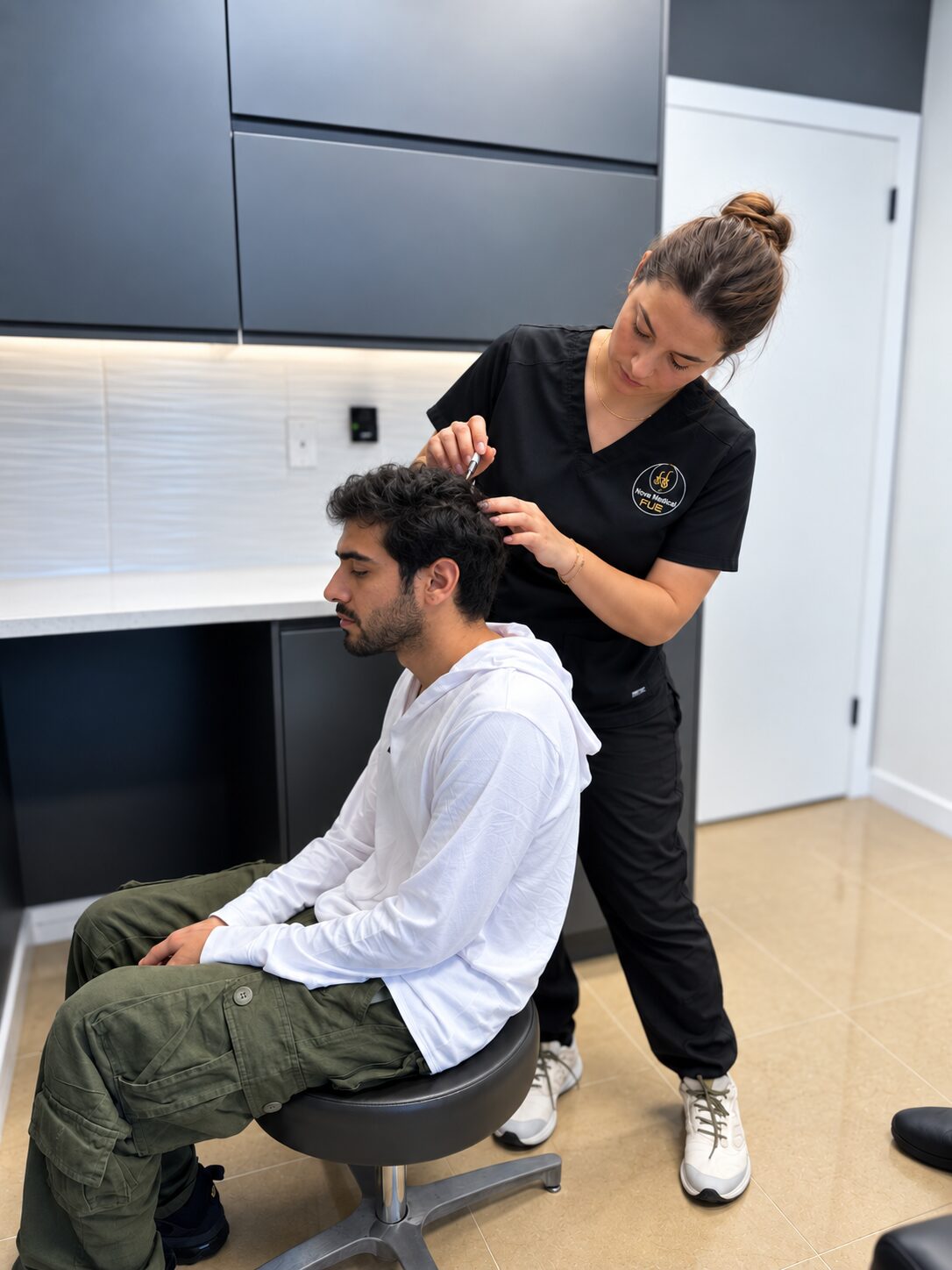
Why Milwaukee Patients Choose Us for FUE Hair Restoration
Choosing a clinic is one of the more important decisions in the whole process, because the planning and handling of grafts shape the result for years. At our Milwaukee clinic, every FUE plan is overseen by Dr. Richard Parfitt, MD, and carried out by a surgical team that works to that plan graft by graft.
Planning is where we spend the time. The hairline is designed around your face shape and age, density is put where it makes the clearest visual difference, and each follicle is placed to match the direction and texture of your own hair. The aim is a result people read as healthy hair rather than as a transplant.
The Glendale clinic is set up for minimally invasive extraction with magnification and fine instruments, which keeps the donor marks small. That matters if you want to keep the sides and back short, and it helps you get back to your normal routine quickly.
Hair loss can change how people feel at work, in photos and in everyday life. We take that seriously, and the same team stays with you from the first consultation through the follow-up months while the new hair grows in.
If you live in Milwaukee, Glendale or elsewhere in Milwaukee County, getting started is simple: book a free assessment, have your scalp examined and leave with a written plan and price. Call or text (414) 888-6426 to set a time.
Every case follows the Nova protocol. FUE is one of several treatments at our hair transplant clinic in Milwaukee, alongside DHI, beard and eyebrow transplants and female hair restoration, so the method is matched to your goals.
Preparing for FUE: The Two Weeks Before
-
1
Pause Blood-Thinning Products
About 7 to 10 days before surgery, stop anti-inflammatory painkillers and supplements such as vitamin E, B vitamins and herbal products. They can increase bleeding and slow healing. Ask us first about anything that has been prescribed to you.
-
2
Skip Cigarettes and Alcohol
Give up smoking and drinking for at least a week beforehand. Both reduce circulation to the scalp, which can slow healing and affect how well the grafts settle.
-
3
Arrive With Clean Hair
Shampoo thoroughly on the morning of the procedure and leave out gels, sprays and other products, so the scalp starts the day clean and oil-free.
-
4
Plan What You Wear
Choose a button-front shirt or something loose, so nothing has to be pulled over your head afterward. Keep the scalp free of styling products in the days before, and bring something to listen to for the session.
FUE Recovery Timeline After Your Glendale Procedure
- Day 1
You head home with a light dressing on the donor area and a spray to keep the grafts moist. Some tenderness and mild swelling are normal, and you receive written aftercare instructions before you leave.
- Day 2
The donor dressing can come off. A little redness or soreness may remain and is handled with the prescribed medication; desk work and other light tasks are usually fine.
- Days 3-5
Swelling often reaches its peak now and can drift toward the forehead or cheeks before fading. Gentle washing begins, following the method we show you.
- Days 5-7
Puffiness and discomfort ease noticeably, and most people are back to everyday routines, including work. Keep washing gently as instructed.
- Days 7-10
Washing can become more normal, with light fingertip massage to help remaining crusts lift. Light exercise can return.
- Days 14-21
The crusts are generally gone. Transplanted hairs may shed as the follicles enter a resting phase, and more demanding exercise and swimming can usually resume.
- Months 3-6
New hairs start to break through. Growth is gradual, so patience pays off during this stretch.
- Months 12-18
The full result is visible, with denser coverage and a hairline that looks natural.
- Weeks 1-4
Reminder: avoid heavy lifting and hard training for the first 4 weeks, then build back up to your usual routine step by step.
The First Days After FUE
Most patients find FUE recovery lighter than they expected. With no strip incision, aftercare is simple, and many people are back to normal activities as early as the next day.
The extraction openings do not need stitches, so there is no suture-removal appointment. Each forms a small scab that falls away on its own within days, and once healed the marks are tiny and hidden among the surrounding hair, even with a short cut.
You take home written aftercare instructions, and our team is a phone call away at (414) 888-6426 if any questions come up along the way.
Light activity is usually comfortable within a day or two. Following the aftercare plan closely in that first week protects the grafts while they anchor.
Mild redness or swelling around the treated zones is common early on. Small crusts form around the grafts; leave them alone and let gentle washing loosen them over roughly a week.
For at least a week, avoid hard exercise, strong sun and heavy sweating. Shedding in weeks two and three is expected, new growth arrives after three to four months, and the full result is typically visible at 12 to 18 months. Our hair transplant recovery page goes into more detail.