
Hair Transplant Repair Wisconsin
Correcting a Past Hair Transplant in Wisconsin
Not every hair transplant turns out the way the patient hoped. At Nova Medical Hair Transplant Wisconsin, part of our work is corrective: taking an older or disappointing result and making it look like hair that simply grew there.
Some people come to us years after a procedure that used methods no longer in favor. Others had surgery more recently and are unhappy with the shape, density or growth. Both situations can often be improved.
We see repair patients from across Wisconsin at our Wisconsin clinic. Typical stories include visible round plugs from decades ago, a hairline set too low or too straight, and grafts that grew poorly or not at all. Each corrective plan is reviewed by Dr. Richard Parfitt, MD, and starts with a realistic count of the donor hair still available.
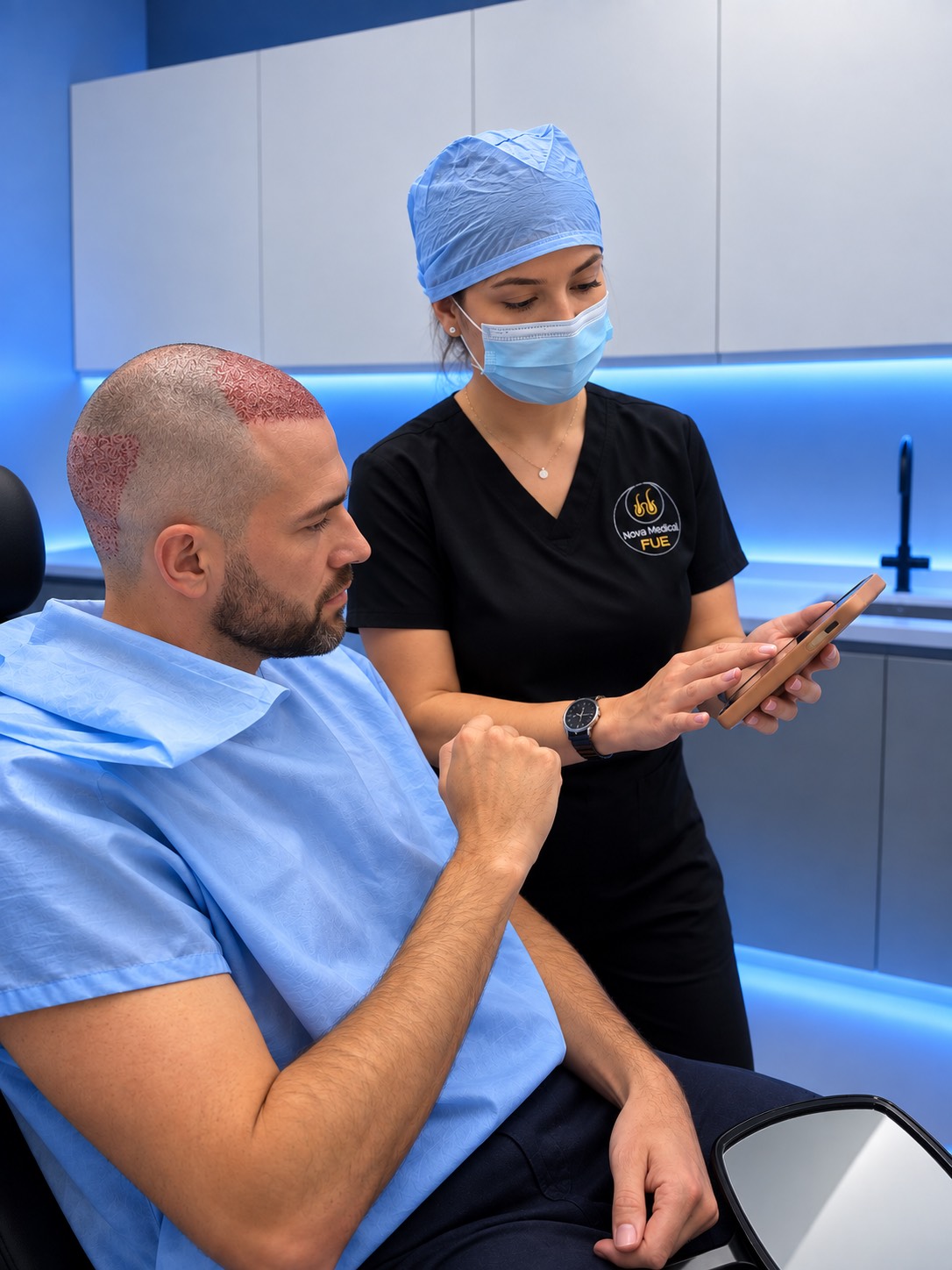
Common Reasons for Hair Transplant Repair
Most corrective cases fall into one of two groups, depending on when and how the first procedure was done:
1. Outdated Hair Transplant Techniques
Surgery from the 1980s and 1990s often moved hair in large round clusters, each holding many follicles at once. The clumps grew in tufts that never looked like a natural hairline, and many patients have spent years hiding them.
- Visible clusters: the big grafts were placed with gaps between them, and as the surrounding native hair thinned, the clusters stood out more.
- Marks on both ends: the older methods could leave obvious scars on the top and at the back of the head, which complicate later work.
- Depleted donor zone: a heavy harvest with poor yield can leave the back of the head thinner and fewer grafts available for a fix.
2. Disappointing Modern FUE Results
FUE itself is a sound method, but results depend on planning and careful handling. When those fall short, people usually notice one or more of these problems:
- A hairline that looks drawn on: a front edge that is too low, too even or the wrong shape for the face rarely passes for natural hair.
- Hair growing the wrong way: grafts set at a steep angle or in the wrong direction can stick up or out and refuse to lie flat.
- Patchy growth: grafts that dried out or were handled roughly may not survive, leaving thin areas despite a high graft count.
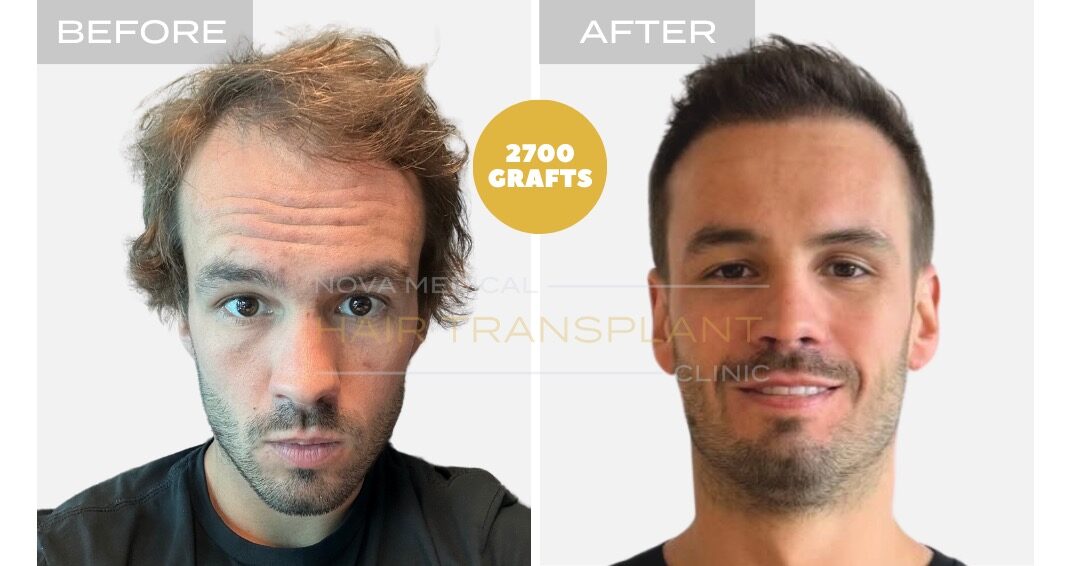
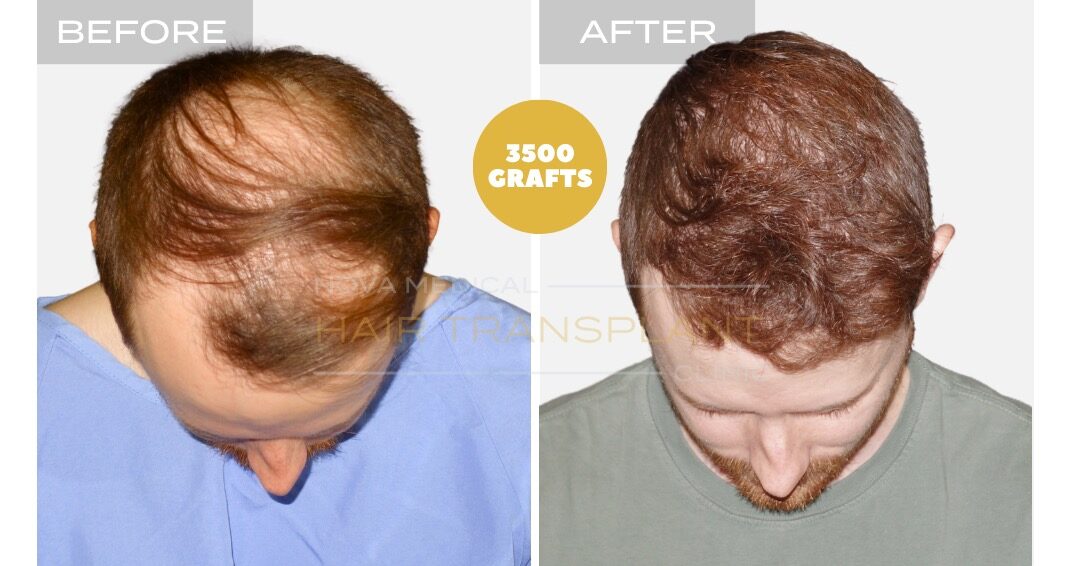
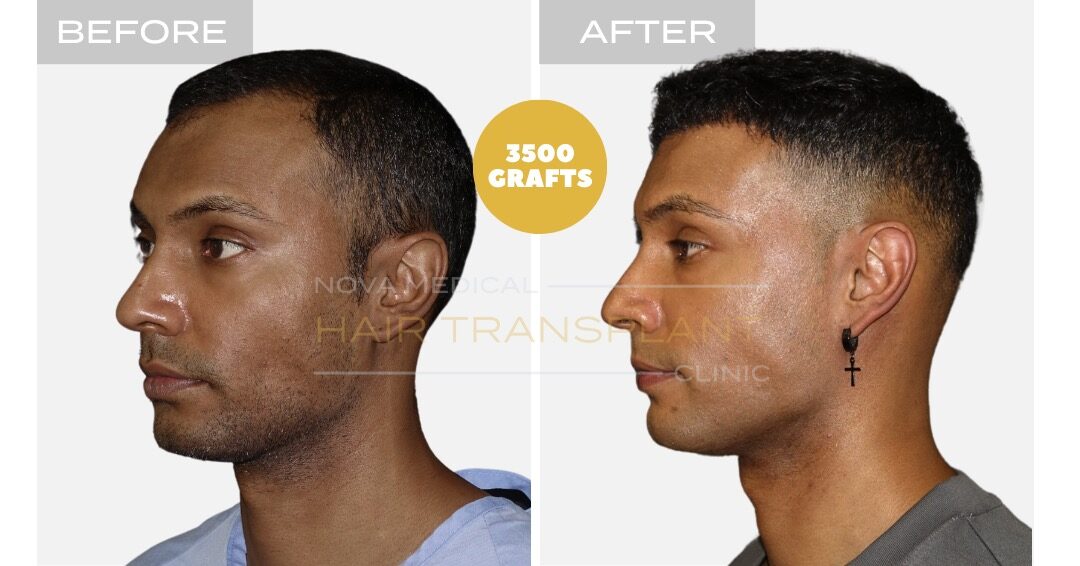
Before & After Gallery
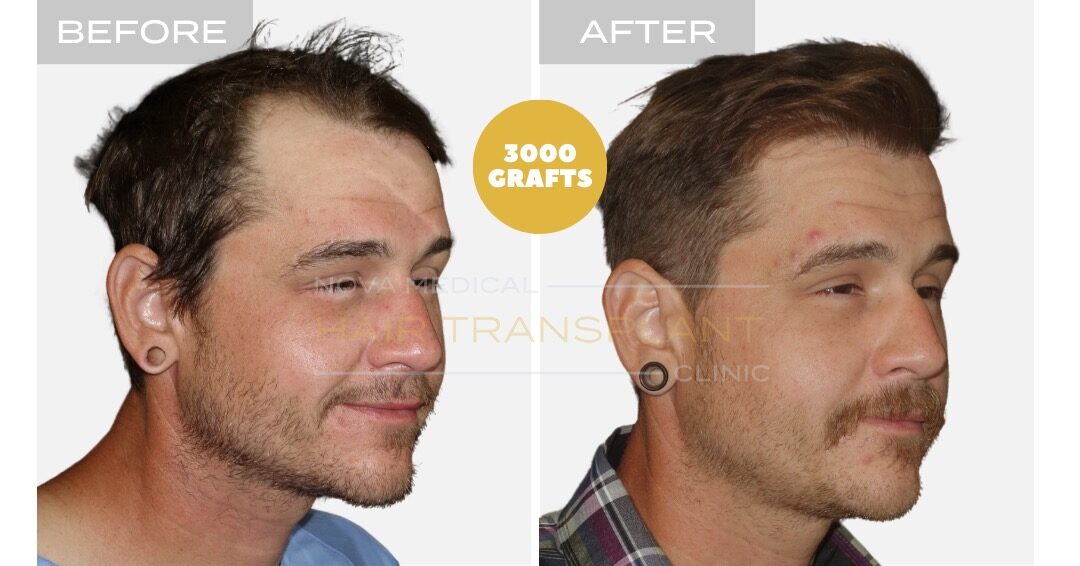
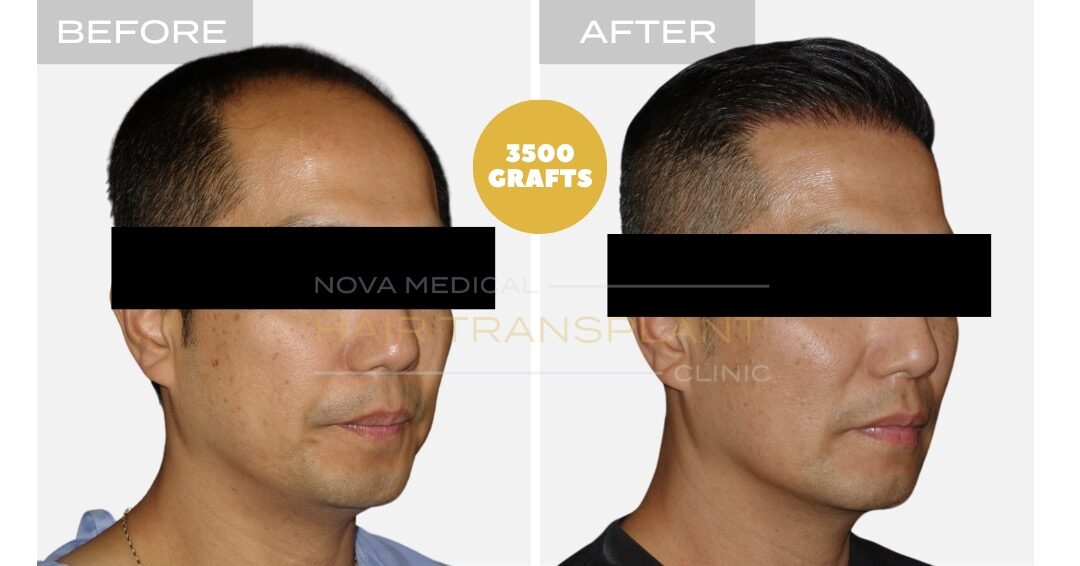
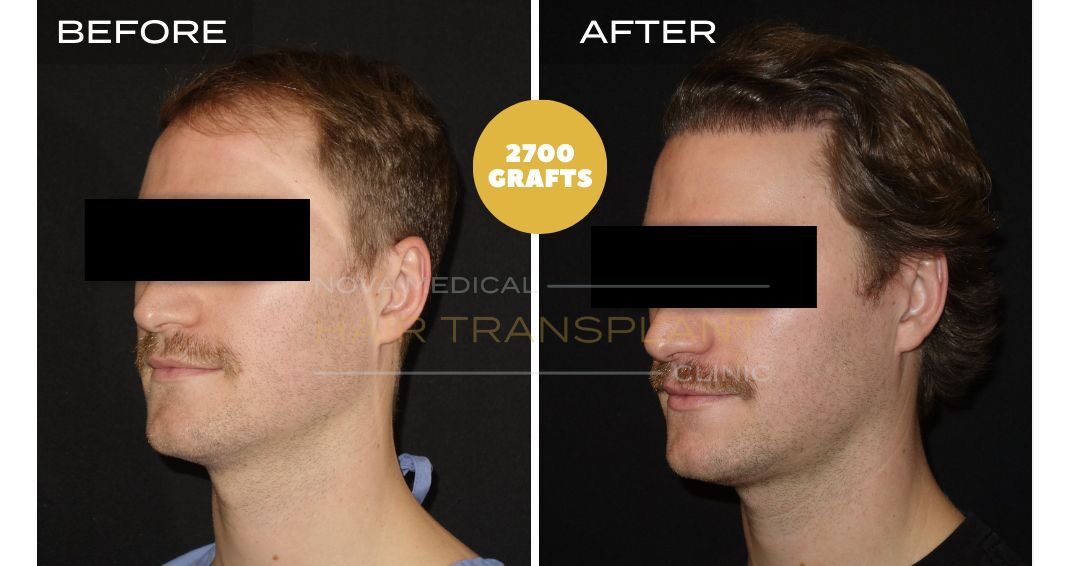
How Nova Medical Approaches Repair
Coming back for a second procedure can be frustrating, especially after money and hope went into the first one. We take time to listen to what went wrong before suggesting anything.
No two repairs are alike. The plan is built around your scalp, your remaining donor hair and what bothers you most, and our surgical team carries it out under the oversight of Dr. Richard Parfitt, MD. New grafts are placed to soften or hide earlier work and to blend with the hair you already have.
A successful correction can make an earlier procedure much harder to spot. You can look through real patient outcomes in our Before and After Gallery, and at your visit we can talk through what is realistic for your own case.
FUE as the Tool for Correction
Repair work at our clinics is done with FUE techniques, taking single follicular units so each graft can be placed exactly where it helps. The goal is a hairline that suits your face and density that looks even from every angle.
- A detailed first visit: we look closely at the earlier work, your donor area and your goals before proposing a plan.
- Careful graft handling: magnification and chilled holding solution help keep each graft healthy from harvest to placement.
- Support before and after: you get clear preparation steps, aftercare instructions and follow-up visits through the growth period.
Request a Free Consultation
No obligation • Free assessment
What Makes Repair Cases Different
Corrective procedures bring challenges a first transplant does not, such as scarred skin and a smaller donor reserve. We plan around these from the first consultation.
Scar Tissue Management
Scarred skin can have a weaker blood supply, which makes it harder for new grafts to take. Grafts can be placed into and around old scars with extra care and spacing, and in some cases follicles are added directly into a scar to help disguise it. Where an older scar needs a different approach, we discuss the options with you.
Enhancing Results with PRP
Some repair patients add Platelet-Rich Plasma also known as PRP, a non-surgical treatment made from a small sample of your own blood. It is used to support healing and the health of existing and transplanted hair, though results vary from person to person.
Patient Education
You should understand every step before you agree to it. We explain how the day will go, how to look after your scalp before and after surgery (our recovery guide has the details) and what you can do over the long term to protect your result.
The Repair Process Step by Step
A corrective session runs much like a standard FUE day, with extra planning built in:
- 1
Reviewing the Earlier Work
We examine your scalp, the previous grafts and any scarring, and ask what you want to change.
- 2
Counting the Donor Reserve
The back and sides of the head are checked for density and quality to see how many grafts can be taken safely.
- 3
The Corrective Session
Under local anesthetic, grafts are harvested one at a time and placed to refine the hairline, fill gaps or soften old plugs, with attention to how they blend with existing hair.
- 4
Healing and Follow-Up
You go home with written aftercare steps, and we see you again over the following months to track growth.
Why Choose Nova Medical in Wisconsin?
Corrective work calls for patience and careful planning. Patients from around Wisconsin choose us for repair because of:
- ✓
Physician Oversight
Our surgical team works under the oversight of Dr. Richard Parfitt, MD, who has more than 25 years of experience focused on the face.
- ✓
Our Wisconsin Clinic
Consultations and treatment take place at our Wisconsin clinic, for patients from across the state.
- ✓
Honest Advice
If a repair is unlikely to give the improvement you want, we tell you so and explain the alternatives.
- ✓
Clear Pricing
Grafts cost $3.99 to $7.99 each, with no session fees and 0% financing for the first 12 months.
Book a Hair Transplant Repair Consultation
If an earlier transplant left you with plugs, an unnatural hairline or patchy growth, our Wisconsin team can assess what is possible and put together a corrective plan that fits your donor supply and your goals.
Call or text (414) 888-6426, or send us a message, to arrange your free assessment in Wisconsin.