
FUT Hair Transplant Milwaukee
Strip Harvesting for Bigger Sessions, Close to Home in Glendale
FUT hair transplant Milwaukee consultations at our Glendale clinic usually start with one question: how much ground needs to be covered? Instead of lifting follicles out one at a time, the team removes a narrow strip of scalp from the back of the head, where hair tends to resist pattern loss, and divides it into the natural groups of hair that are then placed into thinning or bald areas. Because one strip can hold thousands of grafts, the method suits people who need broad coverage, and the transplanted hair is permanent because it is your own.
FUT stands for Follicular Unit Transplantation, often called the strip method. It relocates healthy follicles to the places where hair has thinned out or stopped growing.
The method earns its place when the graft count is high. One session can address advanced loss that would otherwise take several smaller procedures. The trade-off is a fine line at the donor site, which normally sits hidden under the hair around it. If you would prefer no line at all, our FUE Milwaukee page explains the alternative.
Consultations and procedures are offered at our Milwaukee clinic in Glendale, in Milwaukee County just north of the city, so patients from across the Milwaukee area and southeastern Wisconsin do not have to travel for strip surgery. Our main clinic is in Madison (2261 Deming Way, Middleton). Before any date is booked, Dr. Richard Parfitt, MD, reviews the plan: how wide the strip can safely be given the flexibility of your scalp, and how the grafts should be divided between the hairline, the mid-scalp and the crown. The Milwaukee clinic page has the address and booking details.
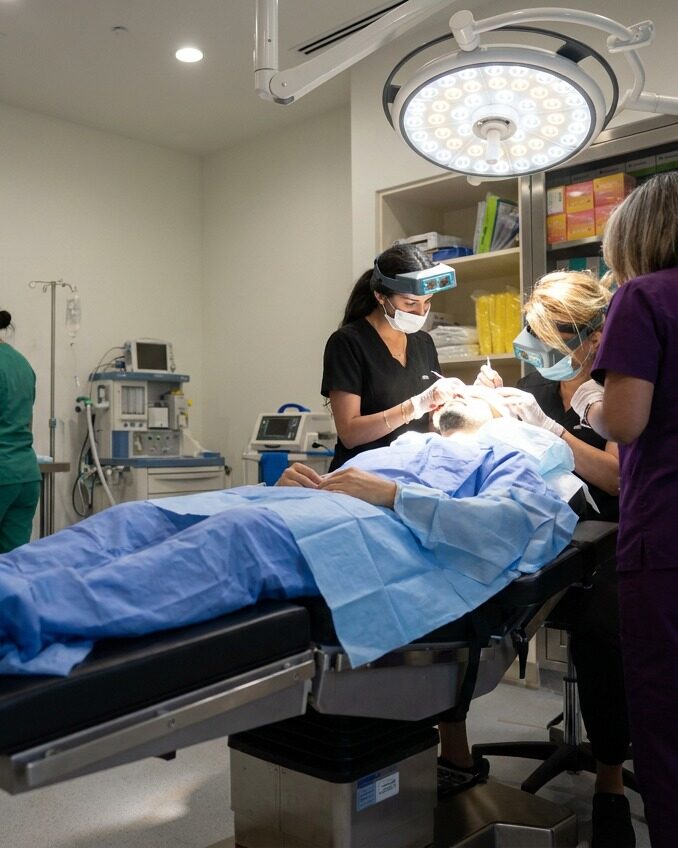
After the strip is removed, the edges of the donor area are brought together so the line heals flat and narrow. The tissue goes straight to the graft bench, where technicians split it under microscopes into units of one to four hairs. Keeping those units intact lets the new hair match the texture and look of the hair beside it.
Before & After Gallery
Every result shows the grafts it took and what the same plan costs. Tap one to see your plan.
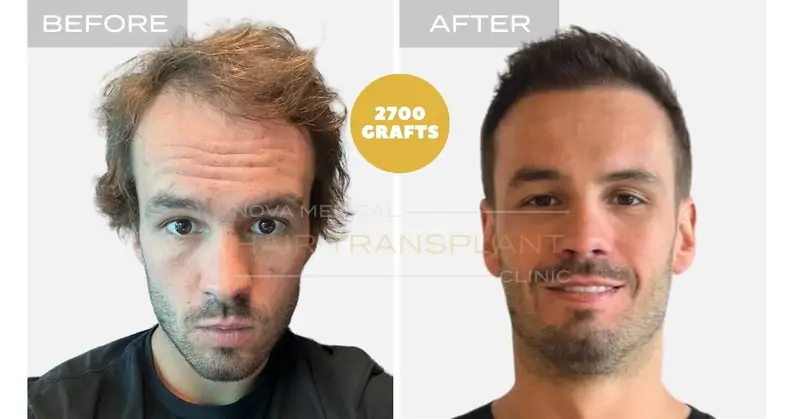
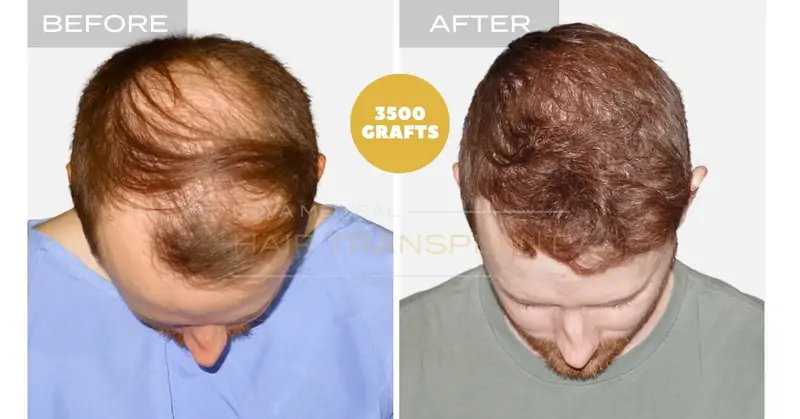
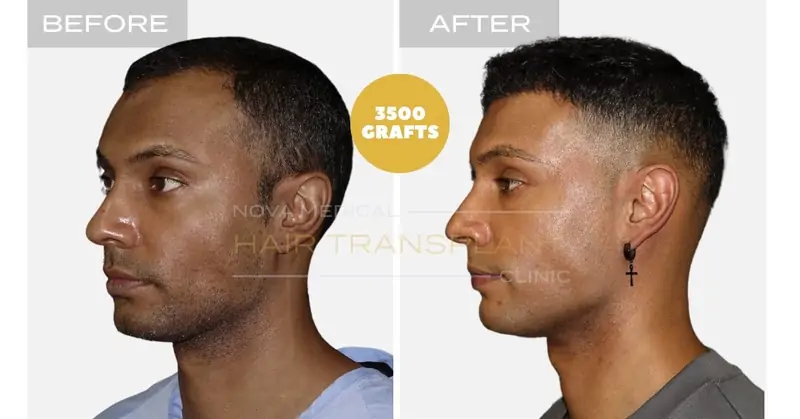
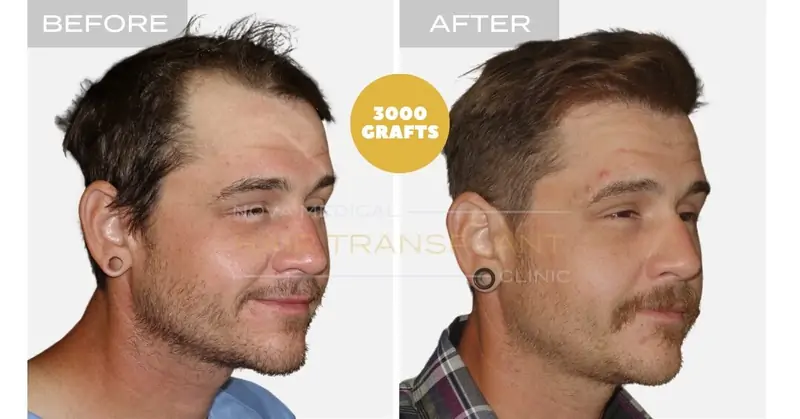
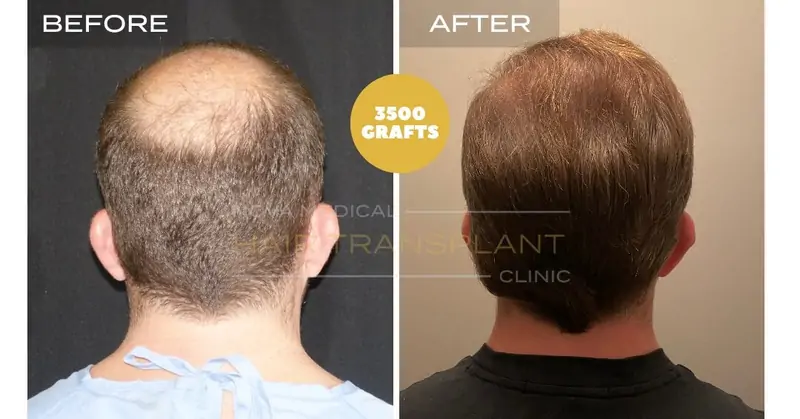

Estimates only - your exact plan and price are confirmed at your free assessment. Monthly payment options available, as low as $270/mo, subject to credit approval. Results vary and are not guaranteed.
Disclaimer: Outcome or results shown are not guaranteed and may vary from patient to patient. Cosmetic procedures are associated with possible risks and complications, always have a thorough discussion with your surgeon. Images posted with consent.
FUT Hair Transplant Milwaukee: How the Day Unfolds
Strip surgery follows a set sequence, and knowing it in advance takes much of the uncertainty out of the day. Here is how a FUT case runs at our Glendale clinic:
-
1
Planning Visit
We examine your hair loss, scalp and general health, measure the density and flexibility of the donor area at the back of the head, and explain how strip harvesting would work in your case. You leave with a written plan and pre-op instructions covering medications and alcohol in the days before surgery.
-
2
Numbing and Strip Removal
On the day, local anesthetic is applied to the donor and recipient areas. Once you are comfortable, a narrow strip of scalp containing healthy follicles is taken from the back of the head and the wound is closed with sutures. The resulting line normally sits under the surrounding hair.
-
3
Dividing the Strip
Technicians take the strip to the graft bench and separate it under microscopes into follicular units, each usually holding one to four hairs. Careful dissection keeps every unit whole and ready for placement.
-
4
Placing the Grafts
Tiny incisions are made in the thinning or bald zones, and the prepared units go in one by one. Each is angled to follow the direction and spacing of your existing hair, which is the step that makes the result blend in with the rest of the scalp.
-
5
Going Home
You leave the same day with written aftercare guidance. Mild swelling and tenderness around the donor line and the grafted area usually settle within a week. The stitches come out 10 to 14 days later, and the transplanted hairs commonly shed in the first weeks before new growth begins a few months on.
-
6
The Finished Result
After 12 to 18 months the full result is in place. The new hair grows like the rest of your hair and can be cut and styled however you like. Some patients pair the transplant with PRP for hair loss to help protect the existing hair between the grafts.
FUT Cost in Milwaukee
Strip surgery is priced per graft, from $3.99 to $7.99 each, and most FUT procedures land between $4,000 and $15,000. Where your case sits depends on the graft count and the complexity of the work. There is no separate session fee.
Since a single strip can supply thousands of grafts in one sitting, larger FUT cases often cost less per graft than covering the same area with FUE, and patients restoring most of the top of the scalp tend to notice that difference. The hair transplant cost Milwaukee page goes through the numbers.
Once your donor area has been assessed and the plan reviewed by Dr. Richard Parfitt, MD, you get the graft count and price in writing, with no pressure to commit that day. 0% financing is available for the first 12 months.
Request a Free Consultation
No obligation • Free assessment
How Long Is a FUT Procedure?
Most strip cases fill a working day, typically four to ten hours. The graft count decides where you fall in that range, since every unit is trimmed and placed by hand.
Breaks are part of the plan, and lunch and snacks are provided. Many patients bring headphones and a playlist or podcast, and a lot of them say the hours went faster than expected.
Because only local anesthetic is used, you are awake for the whole session and can chat, doze or watch a show while the team works.
Who Is a Good Fit for FUT?
Strip surgery is not right for everyone, but it is often a strong option for Milwaukee-area patients who:
- Have broad thinning over the top and crown, such as Norwood V or beyond
- Need a large number of grafts in one day rather than several smaller sessions
- Have enough looseness in the scalp at the back of the head for the strip to close neatly
- Keep the back of their hair long enough to cover a fine donor line
- Want as much coverage as their budget allows
- Have had FUE in the past and want to use the remaining donor hair efficiently
Advantages of a FUT Hair Transplant in Milwaukee
Follicular Unit Transplantation has a long track record for men and women with significant hair loss. Taking donor hair as one strip, rather than follicle by follicle, makes it efficient when a large area needs filling, and for many people the result changes how they feel about their appearance as much as how they look.
At our Glendale clinic, FUT sits alongside FUE, so the choice follows your donor supply and the coverage you are after. Here is why patients from the Milwaukee area choose it:
More Grafts in One Visit
A single strip can provide thousands of grafts, so advanced thinning can often be treated in one procedure.
Better Value on Big Cases
Harvesting many grafts at once usually lowers the per-graft price on larger restorations.
Built for Wide Coverage
Norwood V to VII patterns gain the most, because the strip supplies the volume a large area needs.
Long Clinical History
Strip harvesting has been refined over decades and has a long record of lasting growth.
Grafts Prepared Under Microscopes
Every unit is trimmed under magnification, then set at the angle your own hair grows so it fits in.
One Recovery, Not Several
Getting most of the way to your goal in a single procedure means healing once rather than several times.
Comparing FUT and FUE
FUT - Follicular Unit Transplantation
- Moves several thousand grafts in a single day
- Often cheaper per graft on large restorations
- Only a narrow band is trimmed, so the rest of your hair keeps its length
- Well matched to Norwood V to VII hair loss
- Heals as one fine line covered by surrounding hair
- Keeps donor reserves available for a future session
FUE - Follicular Unit Extraction
- Heals as small dots rather than a line
- Suits short haircuts and smaller cases
- Normally requires shaving a wider donor area
- No incision to heal, so the first days are often easier
- Fits small to moderate density goals
- Generally moves fewer grafts per session
Making the Donor Line Hard to See
Every strip procedure leaves a line across the back of the scalp; that is the compromise for the coverage it delivers. Once healed it is usually narrow, and our team closes the donor edges with a trichophytic technique designed to let hair grow through the scar.
One edge of the wound is trimmed so that follicles sit right at the margin. As it heals, hair grows up through the line and breaks it up, rather than leaving a bare stripe.
If you wear the back at a medium clipper guard or longer, the line is usually difficult to spot, and it tends to fade further over the months after surgery.
FUT or FUE: Making the Choice
The right method depends on how much hair you have lost, what you want the end result to look like, and how you feel about recovery time and donor marks. Both approaches work well; they simply get there in different ways.
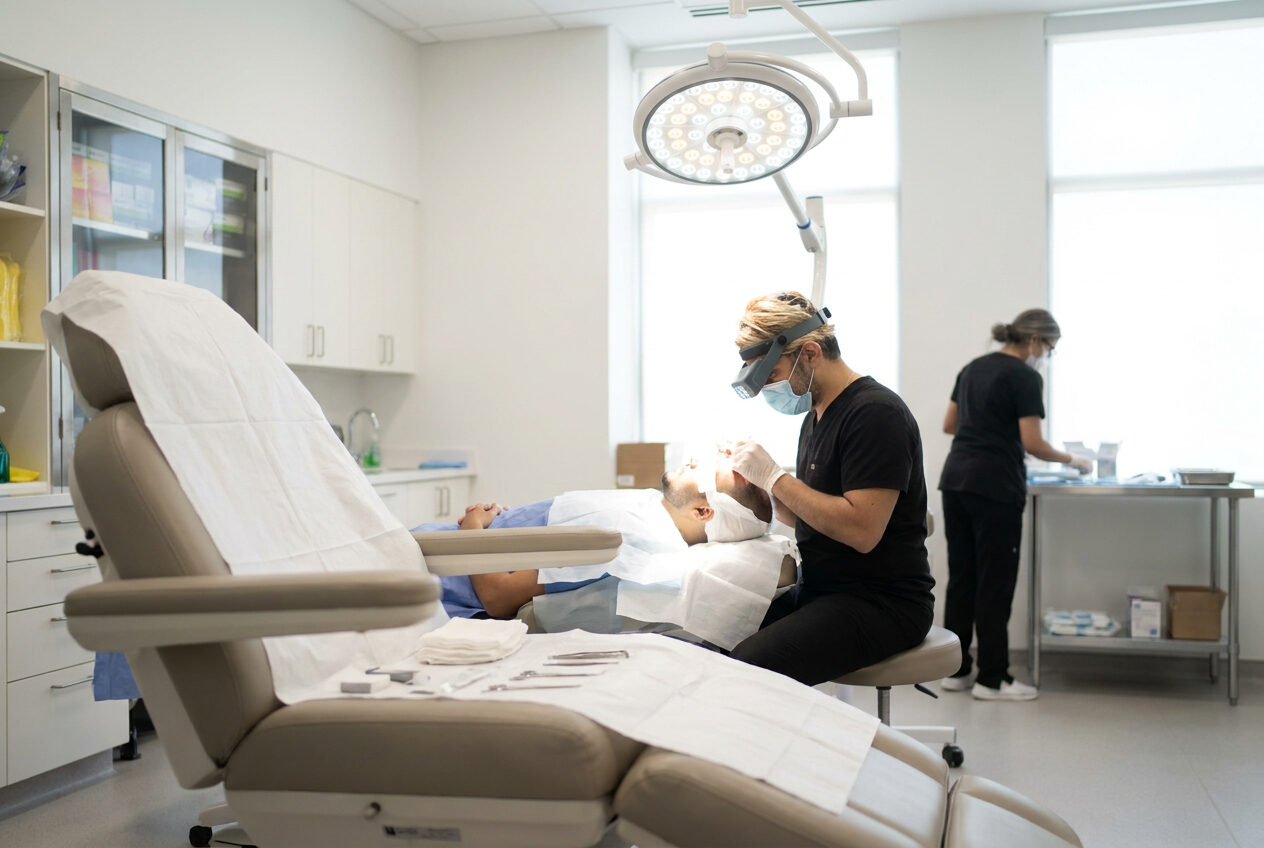
With FUT, a narrow strip of skin is taken from the back of the scalp and divided into grafts. It moves more grafts in one session, which is why it is often recommended for advanced loss. The donor line is usually covered by the hair around it, so the method tends to suit people who keep their hair at a medium length or longer and can allow for stitches and a slightly longer recovery.
With FUE, follicles are punched out one at a time, so there is no strip and no line. The marks are small and scattered, which works with short cuts. Covering a large area can take longer or need more than one session, but early healing is usually quicker and more comfortable.
In short: if you need a big graft count and are comfortable with a fine line at the back, FUT is often the better fit; if you want to keep your hair very short, FUE may suit you more. Our FUT Wisconsin page compares the two methods in more depth, and an exam of your scalp settles the question.
At Nova Medical Hair Transplant in Milwaukee, both methods are planned around your own pattern of loss, whether that is a receding front, a thinning crown or loss across most of the top. The aim does not change: hair that looks natural and lasts.
Book a free consultation and we will examine your scalp, explain which approach makes sense and give you a written plan and price. Call or text (414) 888-6426 to arrange a time at our Glendale clinic.
Before Your Strip Procedure
-
1
Share Your Medication List
At the consultation, tell us everything you take, including vitamins and herbal supplements. If anything raises bleeding risk, you receive written instructions on what to stop and when.
-
2
No Tobacco or Alcohol
Stay away from smoking and alcohol for at least a week before surgery. Both reduce blood supply to the scalp and can slow healing along the donor line and in the grafted zone.
-
3
On the Day
Shampoo that morning and leave out styling products. Wear a shirt that opens at the front, so nothing has to go over your head when you leave.
FUT Recovery Timeline
- Day 1
Same-day discharge with written aftercare. A tight sensation along the donor line is common that first evening.
- Days 2-4
Puffiness may drift down toward the brow and eyes, then fade. Most tenderness sits along the donor line and responds to your prescribed pain relief.
- Days 5-7
Gentle washing, as we show you, starts to loosen the small crusts on the grafts, and everyday routines usually feel manageable again.
- Days 10-14
Stitches come out at a short follow-up visit, and light exercise can generally return.
- Weeks 2-4
Much of the transplanted hair sheds. That is expected: the follicles stay under the skin and will produce new hair.
- Months 3-6
Fresh growth comes through, and coverage improves month by month.
- Months 12-18
The full result is visible, with a natural hairline and more density across the treated areas.
Healing After Strip Surgery
Recovery from FUT is usually uncomplicated. You go home with medication for swelling and discomfort, and soreness along the donor line generally responds to ordinary pain relief, with stronger options if you need them. The sutures are taken out at a visit 10 to 14 days later, and you can phone our team with questions at any point before then. The hair transplant recovery page covers each stage.
Some puffiness is normal and may spread over the brow or under the eyes for a few days. Little crusts appear on the grafts and clear in roughly a week if you keep the area clean, moist and gently washed as shown. Plan on around a week off in-person work; light exercise can restart once the stitches are out, and heavy workouts or swimming after two to three weeks.
Before you go home, the team explains how to look after the donor line and the grafts and what each prescribed medication is for. Arrange for someone to drive you, as you should not drive after sedating medication.
When the new hair has grown in, it behaves like the rest of your hair. Cut, style and color it as normal; there are no long-term limits on sports, swimming or anything else.
If thinning has spread across much of your scalp and you are considering FUT, a consultation is the quickest way to learn whether your donor area can provide the coverage you want.
Hair loss is treatable, and the first step is a conversation. When you are ready, book a free consultation at our Milwaukee clinic in Glendale or online: call or text (414) 888-6426, or use our contact page.