
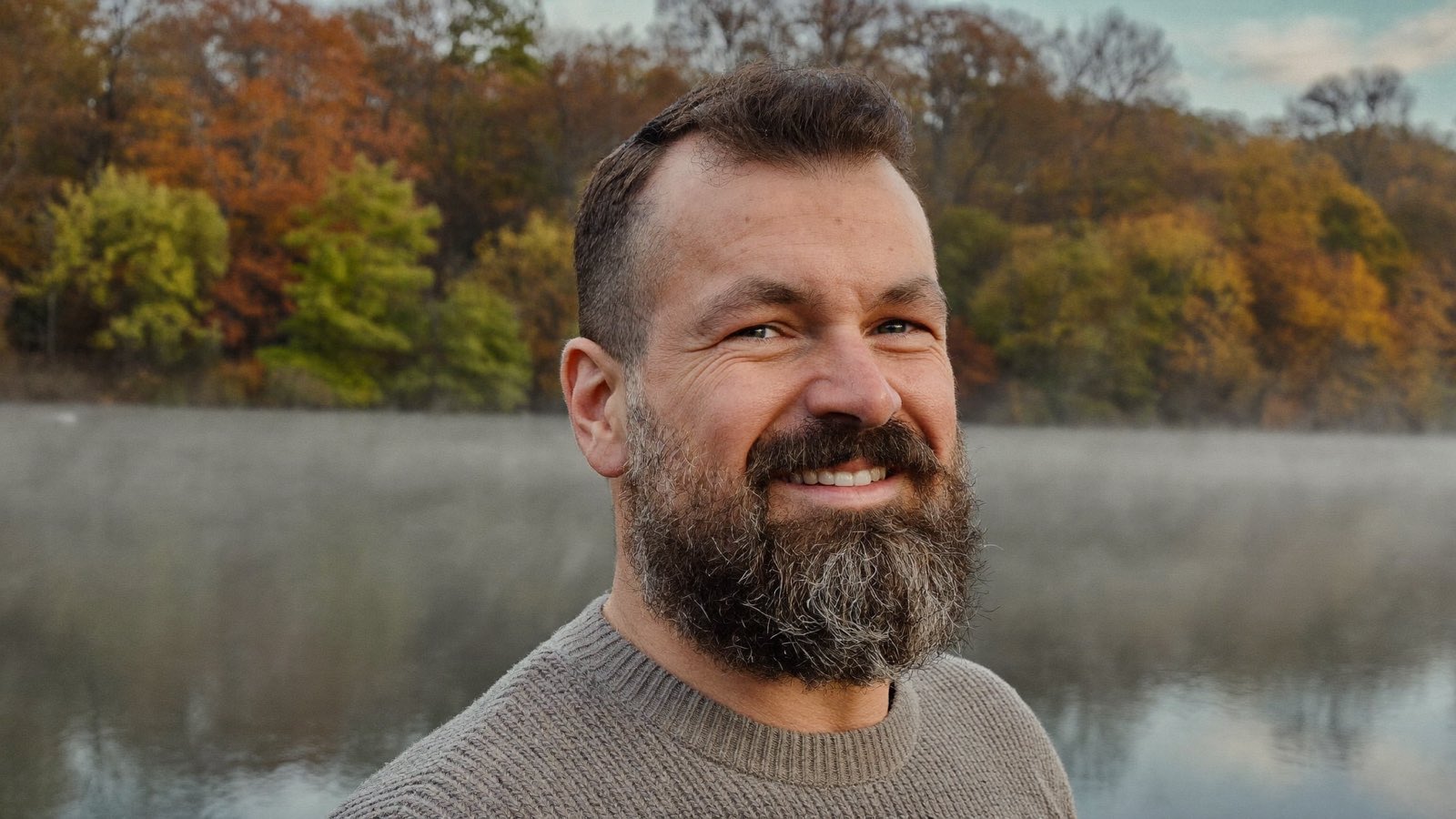
A facial hair transplant moves hair follicles, usually from the back of the scalp, into the beard, mustache, goatee or sideburn areas, where they grow as facial hair. It can fill patchy cheeks, connect a mustache to a goatee, strengthen thin sideburns or cover a scar. Because the grafts are your own hair, they keep growing and can be trimmed and shaved like the rest of your beard. Our beard transplant in Wisconsin page explains the procedure we offer.
This guide covers who is a candidate, which areas can be treated, how the shape is designed, typical graft ranges, where the donor hair comes from, what happens on the day and what results look like. Healing week by week is covered in our separate guide to beard transplant healing.
Who Is a Candidate for a Facial Hair Transplant?
Good candidates are men with patchy or thin facial hair, gaps they cannot grow through, or scars that interrupt the beard. Many have tried growing a beard for months and found that some areas simply do not fill in.
A suitable donor area is also needed. The back of the scalp is the usual source, so the hair there should be dense enough to spare grafts, especially if a scalp transplant might be wanted in the future. Good general health and realistic expectations complete the picture.
Facial hair that is still developing, often in the late teens or early twenties, may fill in on its own with time. Waiting a little can save grafts.
Which Areas Can Be Treated
Most of the face that normally grows hair can be treated. Common areas include:
- Cheeks: filling patchy areas and defining the upper cheek line.
- Mustache: building density above the lip or closing a gap in the middle.
- Goatee and chin: connecting the mustache to the chin and filling the area under the lip.
- Sideburns: thickening thin sideburns or linking them to the beard.
- Jawline: creating a continuous line from ear to chin.
- Scars: covering scars from injuries, surgery or acne, if the skin can support grafts.
Eyebrows are a related area with their own design rules, covered in our eyebrow transplant guide.
How the Shape Is Designed
The shape is designed with you before any grafts are taken. Most people arrive with a picture of the beard they want, and the plan balances that with what suits your face and what your donor supply allows.
The design usually starts with the cheek line and neckline, then the connections between mustache, goatee and sideburns. Lines are drawn on the skin and adjusted in a mirror until you are happy. Dr. Richard Parfitt, MD reviews and approves every plan and designs the shape with the patient, and oversees the procedure on the day.
A natural beard is not perfectly even. Slightly softer edges and density that blends into your existing hair look more convincing than a sharp, uniform block.
Typical Graft Ranges by Area
The ranges below are typical, not quotes. Your own number depends on the size of each area, the density you want and how much existing hair you have.
| Area | Typical graft range | Notes |
| Mustache | About 300 to 800 | Dense, fine work above the lip |
| Goatee and chin | About 400 to 1,000 | Often paired with the mustache |
| Sideburns (both) | About 200 to 500 | Depends on length and width |
| Cheek patches | About 300 to 1,000 | Depends on the size of the gaps |
| Full beard | About 1,500 to 3,000 or more | Cheeks, jaw, chin and mustache together |
Our article on how many grafts you need explains how counts are built for the scalp; the same principles of area, density and donor supply apply to the face.
Where the Donor Hair Comes From
Donor hair usually comes from the back and sides of the scalp, where hair is dense and resistant to pattern loss. Hairs from the lower part of this area are often finer and closer to beard texture, which helps them blend.
Grafts are extracted by hand with fine handheld FUE instruments, one follicular unit at a time. Single-hair and two-hair grafts are used for most facial work, because facial hair grows singly or in small groups. Extraction is spread out so the back of the head still looks even at short lengths, and a reserve is kept in case you want scalp work later.
What Happens on the Day
A facial hair transplant is an outpatient procedure under local anesthesia, so you are awake and go home the same day. The day usually starts with photos and the final design, followed by numbing and extraction from the donor area.
After a break, the recipient areas on the face are numbed and tiny sites are made at a very shallow angle, following the natural direction of beard growth, which changes across the cheeks, jaw and neck. Grafts are then placed one by one. Depending on the size of the plan, the day can take several hours.
What Results Look Like
Transplanted facial hair grows like the rest of your beard and can be trimmed, shaped and shaved. Because it comes from the scalp, it can feel slightly softer or straighter at first, and it often blends more closely over time, especially once it is trimmed to the same length as your native hair.
The transplanted hairs shed in the first weeks, regrow from around month three and usually reach their final density between nine and twelve months. Many men are happy with one session; others choose a smaller second session to add density once the first result has grown.
Alternatives to Consider First
A transplant is not the only way to a fuller beard, and for some men it is not the first step. If facial hair is still developing, time alone may fill it in. Some men use topical treatments on the beard under a physician's guidance, with mixed results. A shorter, well-groomed style can also make patchy areas much less noticeable.
A transplant makes the most sense when gaps have stayed the same for years, when a scar interrupts the beard or when you want a specific shape that your natural growth will not produce.
Questions to Ask at Your Assessment
- How many grafts will my plan need, area by area?
- How will the shape be designed, and can I see it on my face before starting?
- How will extraction be spaced so the back of my head stays even?
- Will enough donor hair remain if I want scalp work in the future?
- When can I trim, use clippers and shave again?
Cost per Graft in Wisconsin
Pricing is per graft, from $3.99 to $7.99, with most procedures between $4,000 and $15,000. There are no session fees, and 0% financing is available for the first 12 months. A written quote follows a free assessment. Our hair transplant cost in Wisconsin page explains what is included.
Planning Around a Wisconsin Winter
Many men like to schedule a facial hair transplant in late fall or winter, when a few weeks of healing can pass more quietly before the beard grows in. A winter procedure works well with a little planning: soft scarves that do not rub the jaw in the first weeks, short time outdoors in strong wind and a humidifier to counter dry indoor heat.
If you are planning around a wedding, a trip or a new job, allow at least a year before the date to see your final result.
Design Your Facial Hair With Us
Book a free assessment at our Madison or Milwaukee clinic. We look at your existing facial hair and donor area, sketch the shape you want and give you a written plan with the graft count, price and healing timeline. Call (414) 888-6426.